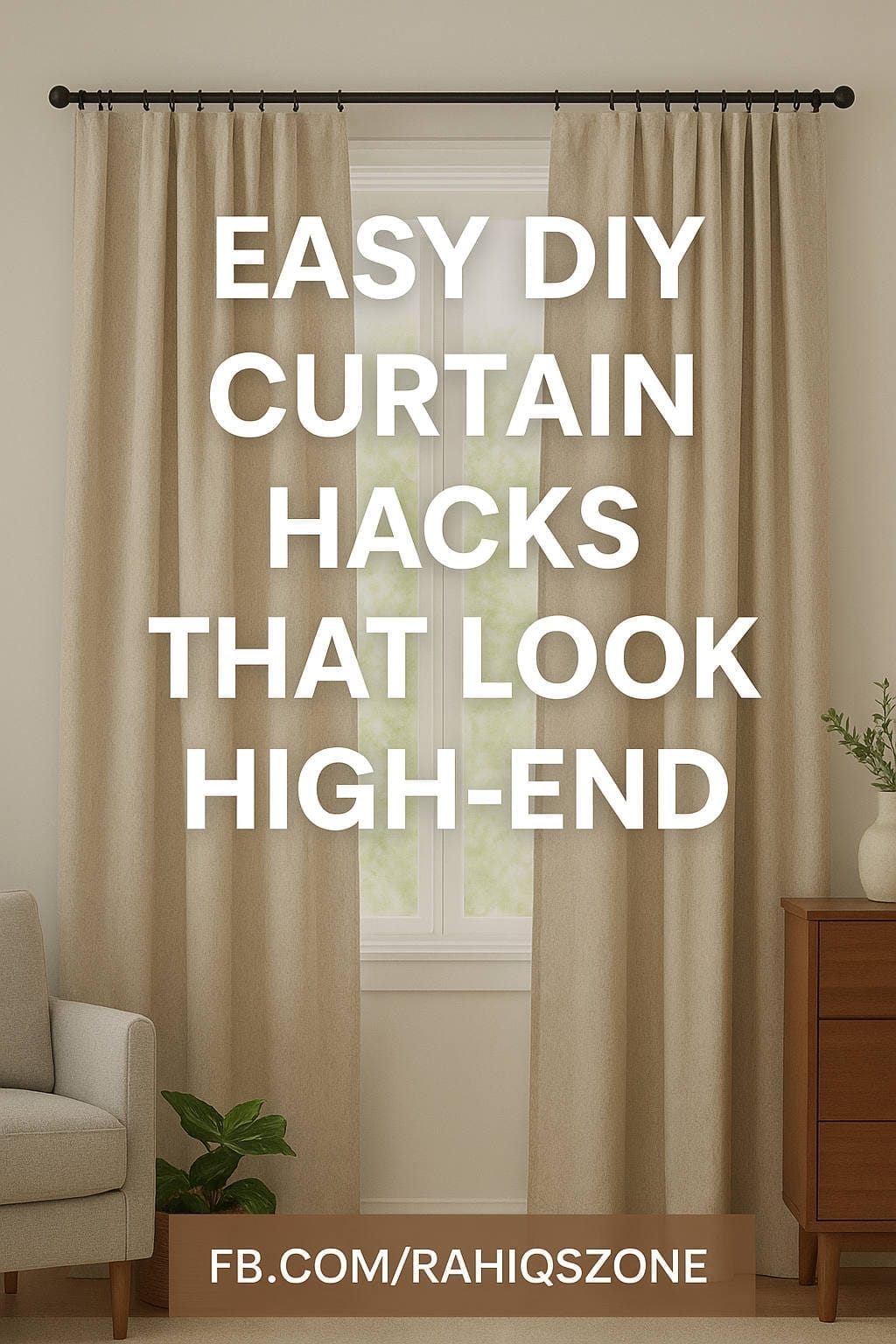
When most people think about giving their home a makeover, they jump straight to paint colors, furniture upgrades, or new flooring. What often gets overlooked, however, is one of the simplest yet most transformative design elements of all—curtains.
Window treatments might not be the first thing you notice when you walk into a room, but they quietly set the tone for the entire space. They frame your windows, filter natural light, add privacy, and provide texture and warmth. If chosen and styled well, they can make a modest room feel refined and cohesive. If chosen poorly—or left out altogether—they can make even beautifully furnished spaces feel unfinished.
But here’s the catch: high-quality, custom-made curtains often come with a price tag that feels out of reach for the average homeowner. Luckily, there are countless ways to hack the system and get that designer, high-end look without breaking your budget. With a bit of creativity, patience, and a willingness to experiment, you can transform basic, store-bought panels into something that looks custom, tailored, and expensive.
In this guide, we’ll explore practical, easy-to-execute curtain hacks that will completely change the way you think about your window treatments. These aren’t quick gimmicks—they’re timeless strategies you can apply to elevate your space, no matter your style or budget.
Why Curtains Can Make or Break a Room
To understand why it’s worth investing a little thought into your curtains, imagine two versions of the same room. One is filled with lovely furniture, well-placed décor, and freshly painted walls—but the windows are bare. The other has the same furniture and décor, but the windows are framed with full-length drapes in a fabric that complements the palette, hanging gracefully all the way to the floor.
The second version almost always feels more polished, warmer, and somehow finished. Curtains act like a frame around a painting: the art is still the star, but without the frame, the picture doesn’t look complete.
Beyond aesthetics, curtains are functional. They give you control over privacy and natural light, soften echoes in large rooms, and provide insulation. In other words, they’re not just pretty—they’re practical.
The problem arises when cost gets in the way. Custom curtains are priced according to fabric, length, lining, and hardware, and those numbers add up quickly. But don’t worry—this is where DIY hacks come to the rescue.
The Golden Rule of High-End Curtains: Hang Them High and Wide
If you only take one tip away from this article, let it be this: the way you hang your curtains matters just as much as the curtains themselves.
Most people make the mistake of installing their curtain rod just an inch or two above the window frame. The result? Curtains that make the window look squat and the ceiling appear lower. Instead, try placing your rod closer to the ceiling—ideally four to six inches below the crown molding or, if your room has no molding, as close to the ceiling as possible.
This simple adjustment gives the illusion of soaring ceilings and creates a sense of grandeur. In addition, extend your rod beyond the sides of the window by at least six to twelve inches. Doing this means your curtains can hang off to the side instead of covering the glass, allowing maximum light to filter in while still framing the view beautifully.
The best part? This hack doesn’t cost a single extra dollar—it’s all about placement.
Fullness Equals Luxury
One of the most noticeable differences between store-bought and custom curtains is fullness. Custom drapes are designed to be wide enough that, when drawn, they still have generous folds. Cheap curtains, on the other hand, often look flat and skimpy.
Here’s the fix: use more panels than you think you need. Instead of hanging one panel on each side of the window, try two or even three. The extra fabric instantly creates volume, giving your curtains that lush, magazine-worthy appearance.
If buying multiple sets feels like too much of an investment, you can layer different fabrics—such as pairing a sheer inner panel with a heavier outer one. The layers not only add fullness but also create depth and texture, much like a professional designer would do.
Upgrade the Hanging Style
The top of your curtain plays a surprisingly big role in how expensive they look. Rod pockets (where the fabric slides directly onto the rod) are common in budget curtains, but they tend to make the fabric hang stiffly, limiting the natural flow.
To fix this, try adding curtain rings with clips. These allow the panels to slide smoothly along the rod while creating soft, elegant pleats. If you prefer a cleaner look, back-tab curtains are another great option—they create neat folds without visible hardware.
For those who want to go the extra mile, pleat tape is a game-changer. By attaching pleat tape to the back of your curtains, you can pinch the fabric into structured pleats that mimic custom drapery. It’s a bit more work, but the result is worth it.
Don’t Underestimate the Power of Steam
You could have the most expensive curtains in the world, but if they’re wrinkled and uneven, they won’t look luxurious. Likewise, the cheapest curtains can look high-end if they’re cared for properly.
Before hanging your curtains, give them a thorough steaming or ironing. This helps the fabric drape naturally and eliminates the creases from packaging. If your curtains are too long, don’t let them bunch awkwardly on the floor. Instead, hem them to the perfect length—either just grazing the floor for a tailored look, breaking slightly for a modern vibe, or puddling generously for a romantic, old-world feel.
If sewing isn’t your strong suit, don’t worry. Iron-on hem tape is inexpensive, easy to use, and creates a clean finish without a single stitch.
Affordable Fabrics That Mimic Luxury
Here’s a secret designers don’t always share: you don’t need to buy expensive upholstery fabric to get that rich look. Some of the best DIY curtains are made from unexpected materials.
Painter’s drop cloths, for example, are incredibly popular among budget-conscious decorators. They’re sturdy, neutral, and have a texture similar to linen. With a quick wash, they soften beautifully, and because they come in large sizes, you can often get a pair of full-length curtains out of a single cloth.
Other surprising fabric sources include flat bedsheets, tablecloths, or even shower curtains for smaller windows. With the right styling, no one will guess your “custom drapes” started life in the bedding aisle.
Elevate the Hardware
Curtain hardware is like jewelry for your windows—it may be small, but it makes a statement. Unfortunately, inexpensive rods can cheapen the entire look. The solution doesn’t have to be expensive: even a budget-friendly rod can be transformed with a coat of matte black or brass spray paint.
If you’re feeling creative, you can even DIY your rod using industrial pipes, wooden dowels, or bamboo poles. Pair them with stylish finials (the decorative ends), and suddenly your curtains feel tailored rather than store-bought.
The Art of Layering
Layering curtains adds instant depth and sophistication. Imagine sheer white panels filtering soft daylight, with heavier velvet or linen drapes framing the sides. The sheer fabric adds lightness, while the outer panels ground the look with richness.
This layering trick is especially useful in multifunctional rooms. Sheers give you privacy without blocking light during the day, while the heavier curtains can be drawn at night for coziness. It’s the best of both worlds, and it looks like something straight from a boutique hotel.
Add Custom Details
Small, thoughtful details can transform plain curtains into something extraordinary. Adding trim or ribbon along the edges is one of the easiest DIY upgrades. A strip of velvet ribbon sewn (or even glued) down the leading edge creates a tailored, designer effect. Greek key trim, tassels, or even pom-poms can inject personality while still looking polished if used sparingly.
If you’re more adventurous, you can even paint or stencil patterns onto plain curtains. A subtle geometric print or dip-dye ombré effect can take inexpensive panels from ordinary to one-of-a-kind.
Creative Tie-Back Ideas
Instead of relying on the standard fabric loops that come with most curtains, consider making your own tie-backs. Leather belts, decorative ropes, vintage brooches, or even reclaimed doorknobs can serve as unique holdbacks. These small accents show thoughtfulness and give your space character, which is often what sets designer interiors apart.
When in Doubt, Match Your Walls
If you’re overwhelmed by fabric choices and worried about making a mistake, here’s a foolproof strategy: choose curtains that match or nearly match your wall color. This monochromatic look creates a seamless effect, elongating the walls and making the space feel calm and cohesive.
Hotels and luxury spaces often use this trick because it feels sophisticated without being distracting. If you want a bit more drama, select a shade slightly darker than your walls for subtle contrast.
Heavier Is Better
Another simple trick to make curtains look more expensive is adding weight to the hem. Lightweight fabrics sometimes float awkwardly or flare out, especially with drafts. Sewing in small drapery weights—or even discreetly tucking pennies into the hem—helps the fabric fall in clean, straight lines.
This small adjustment is hardly noticeable, but it makes your curtains behave the way custom drapes do: structured, polished, and intentional.
Thinking Outside the Window
Curtains don’t have to be limited to windows. Designers often use them in unexpected ways to add softness and drama. You can hang them across an entire wall to create a cozy backdrop for a bed, use them as room dividers in open spaces, or install them around a canopy bed for a romantic retreat.
In small apartments, wall-to-wall curtains can also help disguise awkward layouts or unattractive walls, all while adding the illusion of grandeur.
Bringing It All Together
What’s most exciting about these hacks is that none of them require a massive budget or advanced sewing skills. They’re about paying attention to the details that truly matter: height, fullness, texture, and finish.
By hanging your curtains higher and wider, doubling up panels, steaming them properly, and investing in small upgrades like rings, trim, or better hardware, you can completely transform your space. Whether you choose to repurpose a bedsheet, experiment with painter’s cloth, or DIY your own tie-backs, the end result will always feel more personal and polished than simply grabbing the cheapest option off the shelf.
Ultimately, making curtains look high-end isn’t about how much money you spend—it’s about the care you put into how they’re styled. A few thoughtful choices can take your home from looking ordinary to extraordinary.
So the next time you walk into your living room, bedroom, or dining area and feel like something’s missing, don’t immediately think you need a new sofa or fancy artwork. Look at your windows. With a little creativity, your curtains might just be the design element that transforms your entire home.