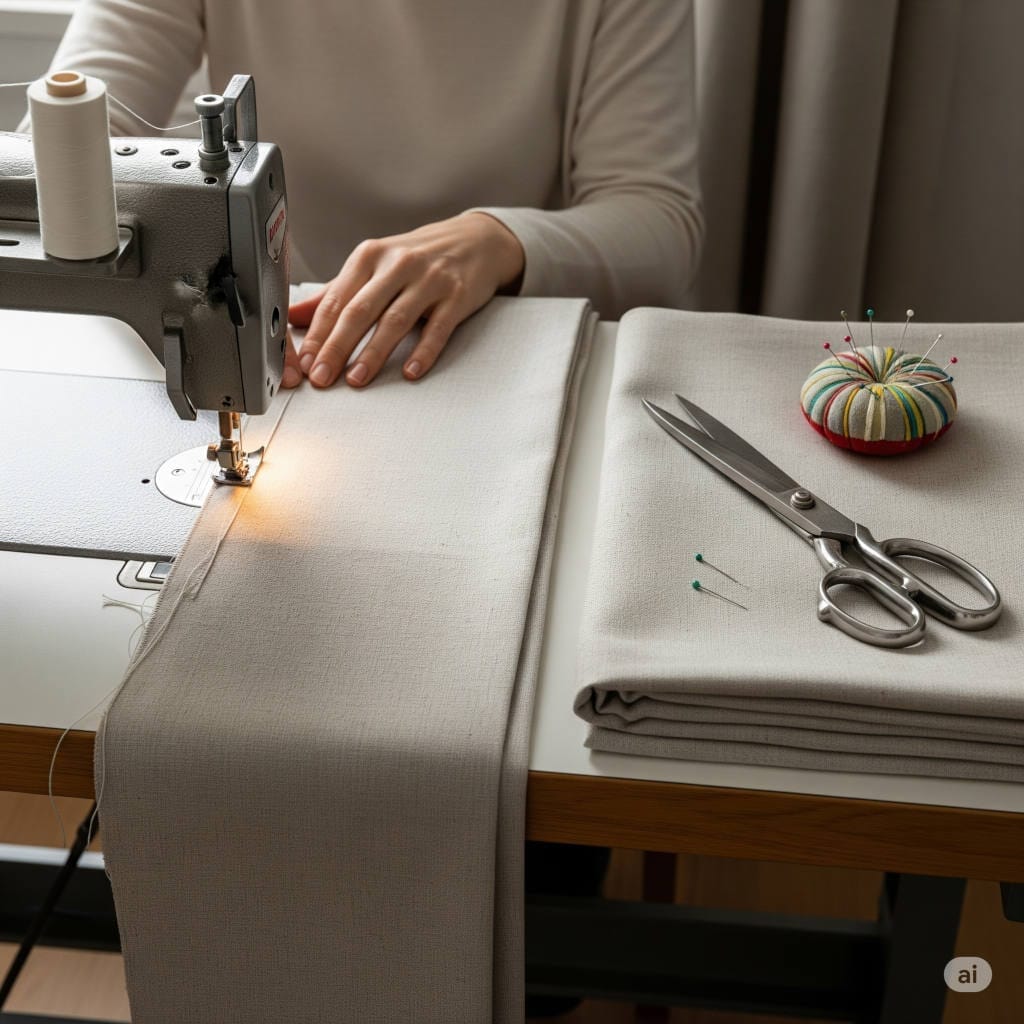
Curtains are more than just fabric panels that cover windows — they frame the view, control light, provide privacy, and add personality to a room. Among the many options available, linen curtains stand out as a timeless and stylish choice. Their soft, natural drape instantly elevates interiors, whether you’re aiming for modern minimalism, rustic charm, or classic elegance.
If you’ve browsed ready-made linen curtains in the UK, you’ve probably noticed two things: they look beautiful, and they can be very expensive. Sewing your own is not only more budget-friendly but also allows you to customise the fit, length, colour, and finish to suit your exact taste.
This comprehensive guide will walk you through how to sew linen curtains from start to finish — including fabric selection, measuring, cutting, sewing, and styling. It’s written with UK readers in mind, with practical tips on sourcing materials, calculating costs, and choosing styles that work for British homes.
Why Linen Curtains Are Worth the Effort
Before diving into the practical steps, let’s look at why linen has become such a favourite fabric for curtains:
- Effortless style: Linen’s slightly textured weave gives it a relaxed, organic look that synthetic fabrics simply can’t replicate.
- Soft light diffusion: Linen lets natural light filter through, creating a bright but calming atmosphere — perfect for Britain’s often grey skies.
- Durability: Linen fibres are strong and long-lasting. With proper care, your curtains will serve you well for years.
- Eco-friendly: Made from flax, linen is a sustainable fabric with a much lower environmental footprint than polyester or cotton.
- Timeless versatility: Linen looks equally at home in a coastal cottage, a Victorian terrace, or a modern London flat.
In short: if you’re going to put time into sewing curtains, linen is an excellent investment.
Tools and Materials You’ll Need
You don’t need a professional workshop to make your own curtains — just a few reliable tools and the right materials. Here’s a checklist:
Fabric and Lining
- Linen fabric: Medium-weight linen (around 200–250gsm) is most versatile for curtains. For a breezier, semi-transparent look, go for lightweight linen.
- Curtain lining (optional): If you want more privacy or insulation, add a lining. Cotton sateen or blackout lining (widely available in UK fabric shops) works well.
Sewing Tools
- Sewing machine (a standard domestic machine is fine)
- Fabric scissors or rotary cutter
- Iron and ironing board
- Tape measure
- Pins or fabric clips
- Tailor’s chalk or washable fabric marker
- Ruler or yardstick
Curtain-Specific Notions
- Curtain heading tape (pencil pleat, pinch pleat, or eyelet tape depending on your style)
- Curtain hooks and rings if using a pole
- Thread to match your fabric
- Curtain weights (optional, for hems)
Step 1: Measure Your Windows Accurately
Accurate measuring is absolutely essential. Curtains that are too short or not full enough will look cheap, no matter how well they’re sewn.
Measuring Width
Always measure the curtain pole or track, not just the window frame.
- For a full, gathered look, multiply the pole width by 2–2.5.
- For a modern, relaxed look, multiply by 1.5.
Example: If your pole is 180cm wide:
- Fullness (2.5×) = 450cm of fabric needed. Divide into two panels = 225cm per panel.
- Relaxed look (1.5×) = 270cm total. Divide into two = 135cm per panel.
Measuring Length
Decide where you want your curtains to finish:
- Sill length: Just above the window sill.
- Below sill: Around 10–15cm below.
- Floor length: Skimming 1–2cm above the floor (most popular in the UK).
- Puddling: 5–15cm pooling on the floor for a luxe, relaxed look.
Measure from the top of the curtain pole (or track) down to your chosen finish point.
Remember to add allowances:
- 10–12cm for the bottom hem
- 5–10cm for the top (depending on your heading style)
Step 2: Preparing Your Linen
Linen is a natural fibre that behaves differently from polyester or cotton. Prepping it correctly will save headaches later.
- Pre-wash the fabric: Wash your linen on a gentle 30°C cycle. Linen can shrink, so don’t skip this step.
- Dry naturally: Tumble drying can be harsh; line drying is better.
- Iron while damp: Linen presses beautifully when slightly moist.
- Cutting straight: Use tailor’s chalk and a long ruler to mark straight lines. Linen frays easily, so sharp scissors are a must.
Step 3: Sewing the Side Hems
Neat side hems give your curtains structure.
- Fold each side edge in by 1.5cm and press.
- Fold again by 1.5cm to encase the raw edge.
- Pin or clip in place.
- Sew close to the inner fold.
Do this on both vertical sides of each panel.
Step 4: Sewing the Top Heading
This is where you decide the overall look of your curtains.
Pencil Pleat (classic British style)
- Fold the top edge down by 3–4cm and press.
- Pin curtain tape along the top edge.
- Sew along the top and bottom edges of the tape, leaving cords free at each end.
- Later, you’ll pull the cords to create neat gathers.
Eyelet Heading (modern look)
- Fold the top edge down by 10cm and stitch.
- Use eyelet tape or install metal eyelets evenly across the panel.
- Slide the pole through the eyelets.
Rod Pocket (simple cottage style)
- Fold the top edge down by 5–6cm.
- Stitch across to create a casing.
- The curtain pole slides straight through.
Step 5: Sewing the Bottom Hem
The bottom hem helps curtains hang straight and prevents fraying.
- Fold the bottom up by 10cm, press.
- Tuck the raw edge under by 2cm, press again.
- Sew close to the inner fold.
Optional: slip small curtain weights into the hem at the sides before stitching.
Step 6: Finishing Touches
- Pull cords on pencil pleat tape to create even gathers. Knot ends securely.
- Iron the curtains lightly (not too stiff, linen looks best with a relaxed finish).
- Hang them up, adjust gathers, and step back to admire your work.
Common Curtain Styles with Linen
The beauty of sewing your own is being able to match your style:
- Country cottage: Natural linen with a rod pocket or ruffled top.
- Scandi minimalist: Crisp white linen with simple pencil pleats.
- Victorian elegance: Floor-length pleated linen with lining in muted tones like sage or charcoal.
- Modern apartment: Bold-coloured linen with sleek eyelets.
Troubleshooting: Solving Common Issues
- Fabric frays while sewing: Finish raw edges with a zig-zag stitch or overlocker.
- Curtains hang unevenly: Let them “drop” for a few days, then trim and re-hem if needed.
- Panels too narrow: Add a contrasting fabric strip along the edges for extra width.
- Uneven gathers: Spread pleats evenly before tying off cords.
Caring for Linen Curtains
Your handmade curtains deserve good care:
- Shake or vacuum with a soft brush to remove dust.
- Wash sparingly (linen doesn’t need frequent laundering).
- Spot clean when possible.
- Machine wash cool (30°C).
- Iron when slightly damp for crisp results.
Cost Breakdown: DIY vs Shop-Bought
Let’s do a quick cost comparison (based on UK prices in 2025):
- Linen fabric: £20–25 per metre
- Lining (optional): £6–10 per metre
- Heading tape: £3–5 per metre
- Thread and extras: £10–15
For a standard pair (200cm wide × 230cm long):
- DIY cost = ~£130–£160
- Shop-bought = £250–£400 (sometimes much higher for custom-made)
That’s a saving of at least £100 — plus you get the satisfaction of making them yourself.
Advanced Options for Confident Sewists
If you’re comfortable with sewing basics, you can try:
- French seams: Perfect for joining multiple widths of fabric neatly.
- Contrasting borders: Add a strip of velvet or cotton at the bottom for extra weight and style.
- Lined and interlined curtains: Great for draughty homes or period properties.
- Tie-top or tab-top curtains: Informal, easy-to-make styles ideal for casual spaces.
Where to Buy Linen in the UK
A few reliable sources include:
- John Lewis & Partners: Good quality, classic neutrals.
- Dunelm: Affordable linen blends, plus blackout lining.
- The Fabric Store UK (online): Pure linens in wide ranges of colours.
- Liberty London: Designer linens (a splurge, but beautiful).
- Local fabric shops: Often hidden gems, especially in market towns.
Why Sewing Curtains Is So Rewarding
Sewing your own curtains might seem daunting at first, but once you’ve made a pair, you’ll realise how achievable it is. Not only do you save money, but you also:
- Gain control over the exact length, fullness, and finish.
- Choose from a wider palette of colours and textures than ready-made options.
- Create something with your own hands that you’ll see and use every day.
- Add a personal touch to your home that can’t be bought off the shelf.
Many people find that once they make their first pair, they go on to make curtains for the entire house.
Final Thoughts
Whether you live in a coastal Cornish cottage or a sleek Manchester city flat, linen curtains add warmth, character, and style. By sewing your own, you’ll not only save money but also enjoy a project that’s creative and practical.
Start with accurate measurements, take time with your hems and heading, and remember that linen doesn’t need to look perfect — its beauty lies in its relaxed, natural drape. Once hung, your handmade curtains will frame your home with elegance for years to come.
So, grab your tape measure, pick out a gorgeous linen fabric, and get started. You’ll soon be enjoying that satisfying moment when you pull back your very own handmade curtains each morning.