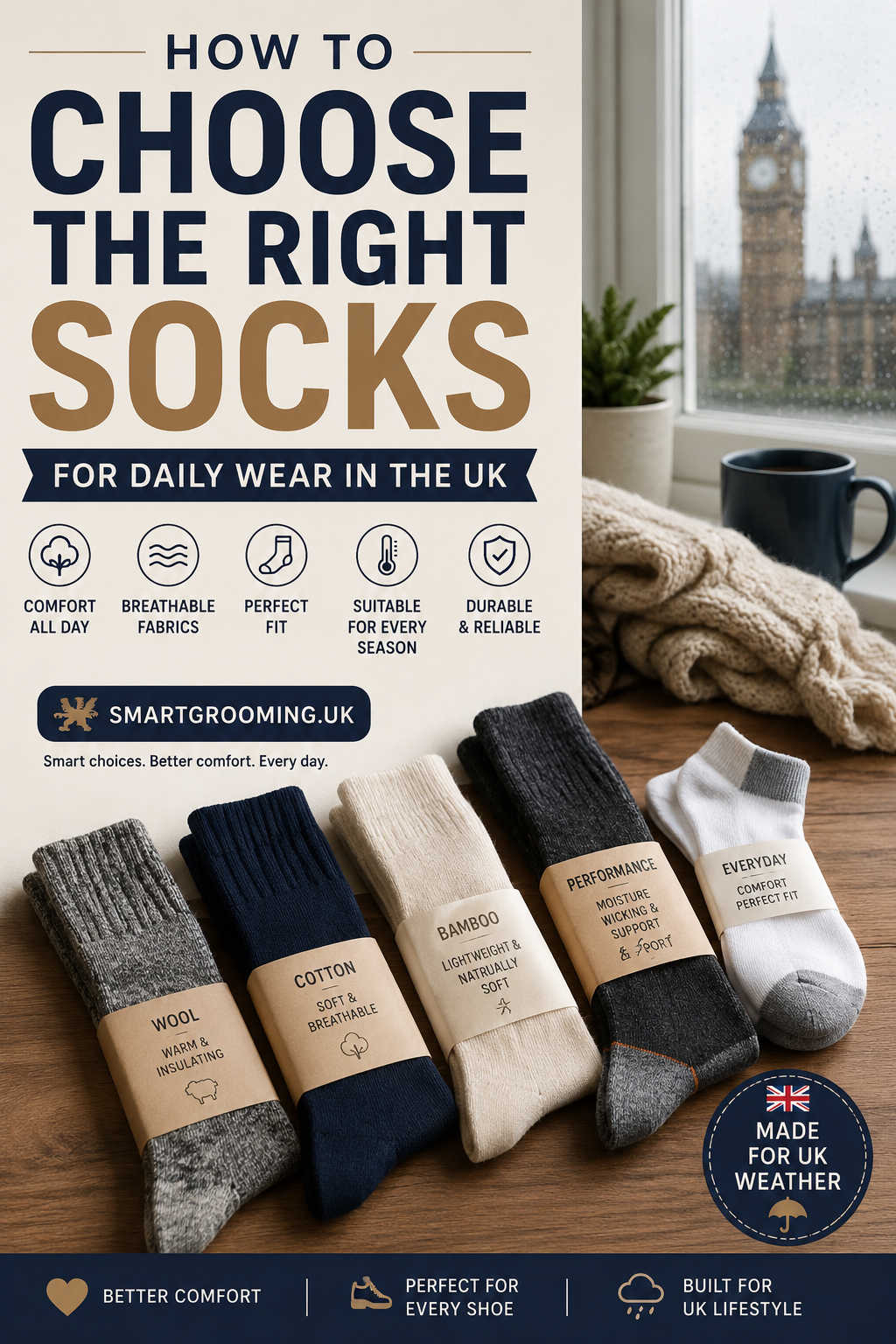
Choosing the right socks for daily wear in the UK is often overlooked, yet it plays a crucial role in overall comfort, foot health, and even personal style. With the UK’s unpredictable weather—ranging from damp winters to mild but occasionally warm summers—your choice of socks can significantly impact how your feet feel throughout the day.
Whether you’re commuting in London, walking through rural towns, working in an office, or staying active outdoors, the right socks help regulate temperature, reduce moisture, prevent blisters, and improve shoe comfort. Poor sock choices, on the other hand, often lead to discomfort, odour build-up, and unnecessary wear on footwear.
This comprehensive guide explains everything you need to know about selecting the best socks for daily wear in the UK. It covers materials, fit, seasonal choices, sock styles, durability, and practical buying tips to help you build a reliable and comfortable sock wardrobe.
Why Choosing the Right Socks Matters for Everyday Comfort
Socks are not just accessories—they are a functional layer between your feet and shoes. A good pair can transform the feel of even average footwear, while a bad pair can ruin the experience of premium shoes.
Well-designed socks provide:
- Moisture control to keep feet dry throughout the day
- Friction reduction to prevent blisters and rubbing
- Temperature regulation for seasonal comfort
- Cushioning for long hours of walking or standing
- Odour resistance for better hygiene
- Support for daily movement and activity
In the UK, where people often walk long distances and deal with frequent weather changes, socks become even more important. Investing in the right pairs is one of the simplest ways to improve daily comfort without changing your entire wardrobe.
Understanding Sock Materials and Their Performance
The material of your socks determines how they feel, how long they last, and how well they perform in different conditions. Choosing the right fabric is the foundation of comfort.
Cotton Socks: Everyday Comfort and Simplicity
Cotton socks remain one of the most commonly worn options in the UK due to their softness and affordability.
Advantages:
- Soft and comfortable for daily use
- Breathable in mild conditions
- Widely available in all price ranges
- Suitable for casual wear
Limitations:
- Absorbs moisture and dries slowly
- Can become uncomfortable during long walks
- May lose shape after repeated washing
Cotton socks work best for short-duration wear, office environments, and relaxed daily routines. However, they are not ideal for high activity levels or wet weather conditions.
Wool Socks: The UK Winter Essential
Wool socks, especially merino wool, are highly suited for the UK climate due to their insulation and moisture control properties.
Advantages:
- Excellent warmth during cold months
- Natural moisture-wicking ability
- Odour resistance for long wear
- Comfortable temperature regulation
Limitations:
- Higher price compared to cotton
- Some varieties may feel slightly warm indoors
Merino wool socks are particularly effective for winter commuting, outdoor walks, and cold office environments.
Bamboo Socks: Soft, Breathable, and Sustainable
Bamboo socks have grown in popularity across the UK due to their comfort and eco-friendly appeal.
Advantages:
- Extremely soft texture
- Naturally breathable and lightweight
- Good moisture control
- Antibacterial properties help reduce odour
Limitations:
- Slightly more expensive than cotton
- Durability varies depending on manufacturing quality
Bamboo socks are ideal for people seeking all-day comfort with a focus on sustainability and skin-friendly materials.
Synthetic Blends: Durability and Performance
Synthetic fibres such as polyester, nylon, and elastane are commonly blended with natural materials to improve performance.
Advantages:
- Strong and long-lasting
- Excellent stretch and fit retention
- Quick-drying and moisture-wicking
- Ideal for active use
Limitations:
- Can feel less natural on the skin
- Lower breathability in low-quality versions
Blended socks often provide the best balance of comfort, performance, and durability for daily wear.
Best Socks for UK Weather Conditions
The UK climate is known for its unpredictability. A good sock wardrobe should adapt to seasonal changes.
Winter Socks for Cold and Wet Conditions
During winter, keeping feet warm and dry is essential.
Look for:
- Thick merino wool socks
- Thermal-lined socks
- Cushioned crew socks
- Moisture-wicking materials
Winter socks should prioritise insulation while still allowing breathability to prevent dampness.
Spring and Autumn Socks for Changing Temperatures
Transitional seasons require versatile socks that adapt throughout the day.
Ideal choices include:
- Medium-weight bamboo socks
- Wool blends with light cushioning
- Cotton blends with moisture control
These options help manage fluctuating temperatures and occasional rainfall.
Summer Socks for Breathability and Cooling
In warmer months, comfort depends on airflow and sweat control.
Best options:
- Lightweight cotton socks
- Thin bamboo socks
- Low-cut ankle socks
- Performance sports socks
Summer socks should feel light, breathable, and non-restrictive.
Choosing the Right Sock Size and Fit
Fit is often ignored, but it has a direct impact on comfort and durability. Even high-quality socks perform poorly if they do not fit correctly.
Problems with Small Socks
- Restrict circulation
- Increase foot pressure
- Wear out quickly
- Cause discomfort in tight shoes
Problems with Large Socks
- Bunching inside shoes
- Increased friction leading to blisters
- Slipping during movement
A well-fitted sock should feel snug but not tight, with enough elasticity to stay in place throughout the day.
Sock Cushioning Levels Explained
Cushioning affects both comfort and shoe compatibility.
Light Cushioning
Best for:
- Formal shoes
- Office environments
- Slim-fitting footwear
Provides a clean, minimal feel without bulk.
Medium Cushioning
Best for:
- Daily commuting
- Walking
- General-purpose wear
Offers balanced comfort for most situations.
Heavy Cushioning
Best for:
- Long-distance walking
- Hiking or outdoor use
- Cold weather conditions
Adds impact protection and reduces foot fatigue.
Breathability and Moisture Control: Why It Matters
Foot moisture is one of the main causes of discomfort and odour. In the UK, where weather conditions often shift throughout the day, moisture management is essential.
High-quality socks help:
- Keep feet dry during long wear
- Prevent fungal infections
- Reduce odour build-up
- Improve comfort in closed shoes
Materials such as merino wool, bamboo, and technical synthetic blends perform best in moisture regulation.
Matching Socks with Different Types of Shoes
Socks should complement footwear, not work against it.
Trainers and Sneakers
Best socks:
- Ankle socks
- Cushioned sports socks
- Moisture-wicking blends
Designed for comfort and movement.
Formal Shoes
Best socks:
- Thin cotton socks
- Bamboo dress socks
- Lightweight wool blends
Focus on a sleek appearance and comfort inside fitted shoes.
Boots
Best socks:
- Thick wool socks
- Reinforced crew socks
- Thermal socks for winter
Provide insulation and durability for outdoor use.
Casual Shoes
Best socks:
- Crew socks
- Lightweight cotton blends
- Everyday bamboo socks
Versatile and suitable for most outfits.
Popular Sock Styles in the UK
Understanding sock styles helps build a practical wardrobe.
No-Show Socks
Perfect for low-profile footwear such as loafers and trainers. They remain hidden while providing comfort.
Ankle Socks
A popular choice for casual wear and gym use. Lightweight and breathable.
Crew Socks
The most versatile option, suitable for work, walking, and everyday wear.
Knee-High Socks
Used mainly for boots, winter wear, and outdoor activities requiring extra coverage.
Durability and Quality Construction
Durability ensures long-term value and better comfort over time.
Look for:
- Reinforced heel and toe areas
- Strong elastic bands that retain shape
- Flat seams to reduce irritation
- High-quality stitching for longevity
Well-made socks often last significantly longer, making them more cost-effective than cheaper alternatives.
How Many Socks Do You Really Need?
A practical sock rotation ensures cleanliness and convenience.
A typical UK household may benefit from:
- 7–12 pairs of daily socks
- 3–5 pairs of formal socks
- 3–6 pairs of sports socks
- 2–4 pairs of winter thermal socks
Having a variety ensures you are prepared for different weather conditions and activities.
Sustainable Sock Choices in the UK
Sustainability is becoming increasingly important for UK consumers.
Eco-friendly options include:
- Organic cotton socks
- Bamboo fibre socks
- Recycled polyester blends
- Ethically produced garments
Choosing durable, long-lasting socks also reduces environmental waste over time.
Common Mistakes to Avoid When Buying Socks
Many people unknowingly reduce comfort by making simple mistakes.
Avoid:
- Choosing socks based only on price
- Ignoring material composition
- Wearing one type of sock all year round
- Selecting incorrect thickness for shoes
- Overlooking moisture control features
A little attention during purchase leads to significantly better daily comfort.
How to Care for Your Socks Properly
Proper care extends lifespan and maintains comfort.
Best practices:
- Wash socks inside out
- Avoid excessively hot water
- Use gentle detergents
- Air dry when possible
- Store pairs together
Good maintenance preserves elasticity and prevents premature wear.
Final Thoughts
Selecting the right socks for daily wear in the UK is about balancing comfort, practicality, and weather adaptability. The ideal sock wardrobe includes a mix of cotton, bamboo, wool, and performance blends to cover all seasons and activities.
By paying attention to material, fit, cushioning, and durability, you can significantly improve your daily comfort without changing your footwear or lifestyle. Socks may seem like a small detail, but they play a major role in how your feet feel throughout the day.
Investing in high-quality socks is ultimately an investment in comfort, hygiene, and long-term foot health.