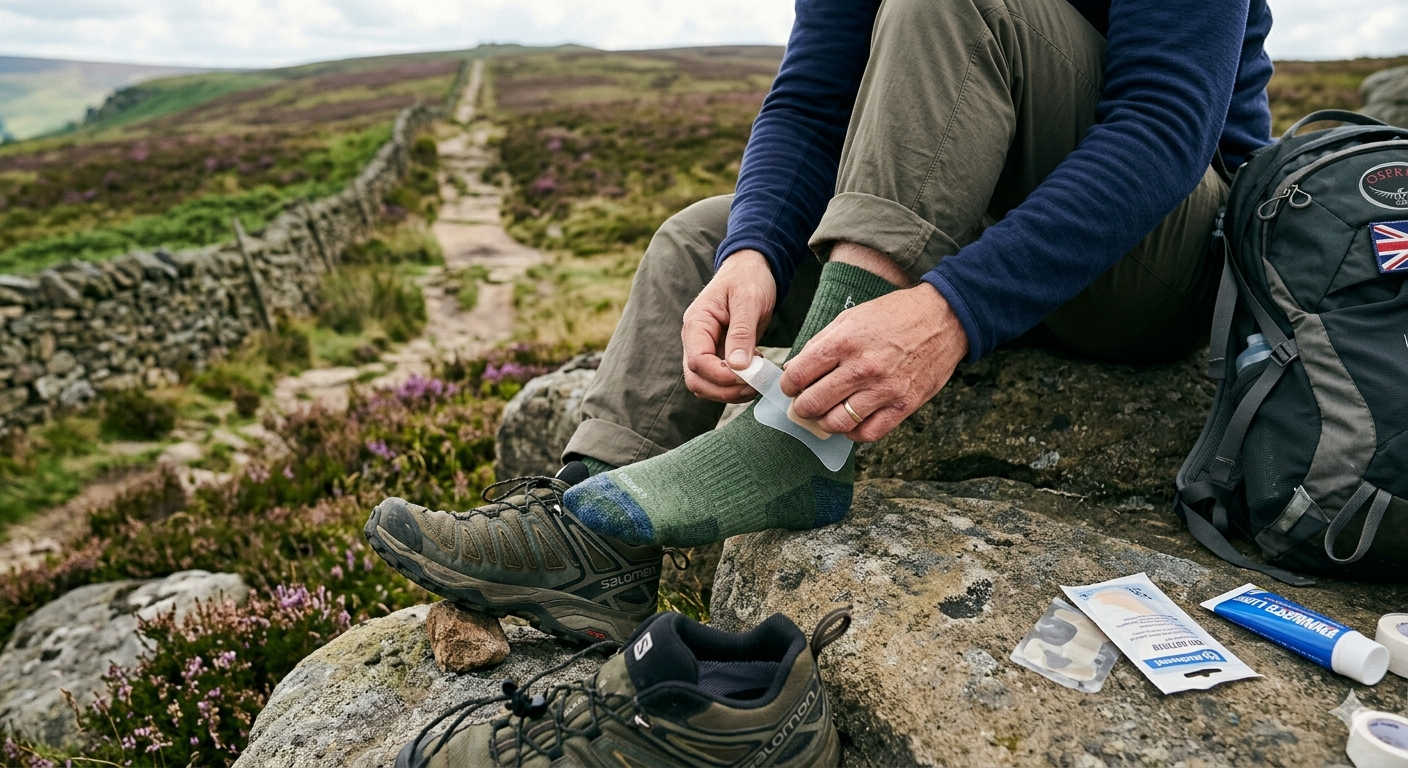
If you spend enough time walking or running in the UK, you learn a harsh truth pretty quickly. You check the weather app, spot an innocent-looking cloud symbol, and decide to go for it anyway. An hour later, you’re halfway across a ridge in the Peak District or squelching along a canal path, and the skies have properly opened up. Somewhere around then, you feel it—that telltale hot spot on your heel.
The thing is, blisters aren’t just a summer annoyance here. Thanks to drizzle, mud, grit, and wildly unpredictable terrain, they’re a year-round hazard. The good news is that you can almost always stop them before they start. Whether you’re rambling the South West Coast Path or doing laps of a rainy city park, a few smart tweaks make all the difference.
Start with the One Mistake Most People Make
Ask any experienced fell runner or long-distance walker what causes blisters, and they’ll barely mention the shoes. The real culprit is usually what’s on your feet first: damp cotton socks.
Cotton is like a sponge. It soaks up sweat and rain, holds that moisture against your skin, and stays there. Once your skin goes soft and pruny, every step creates friction. In the UK climate, that’s a recipe for trouble even on a mild day.
Sock Choices That Actually Work Here
There are two reliable routes, and both feel quite different:
- Merino wool blends: Don’t let the word “wool” fool you into thinking these are only for winter. Merino wicks moisture beautifully, breathes when it’s muggy, and still insulates when it’s soaking wet. Brands like Bridgedale—founded right here in the UK—design their socks with British footpaths and weather in mind.
- Dual-layer anti-blister socks: The 1000 Mile sock is a classic example. It uses an inner and outer layer that rub against each other instead of against your skin. For long, wet days when you can’t stop to change pairs, this design is a genuine lifesaver.
Lock Your Heel in Place Before the First Step
Blisters pop up when your foot moves around inside your shoe, even by a millimetre or two. Over ten miles, those tiny slides add up to a lot of raw skin.
The simplest fix costs nothing. It’s a lacing trick called the heel lock (or runner’s loop), and it works on walking boots and trainers alike.
How to Do the Heel Lock Lacing
- Lace normally up to the second-to-last eyelet.
- On each side, thread the lace back through that same top eyelet to create a small loop.
- Cross the laces and feed each end through the opposite loop.
- Pull downwards firmly and tie as usual.
When done right, your heel stays snug in the heel cup even on steep climbs or slippery descents. If your foot can’t slide, the friction drops dramatically.
Keep Grit and Mud Where They Belong
If you’ve ever run a cross-country race or walked a bridleway after heavy rain, you’ll know this feeling. A tiny piece of grit works its way into your shoe, mixes with damp sock fabric, and starts rubbing like sandpaper.
This problem catches a lot of people out because it happens so gradually. You don’t notice the stone, but you definitely feel the angry patch of skin ten minutes later.
Simple Barriers Worth Trying
- Lightweight ankle gaiters: Modern versions from brands like Inov-8 or Dexshell are minimal and breathable. They look a bit serious, but they stop mud, seeds, and stones from sneaking over the top of your shoe.
- Ruffle anklet socks: For road runners dodging puddles and wet leaves, even a sock with a slightly raised cuff helps block debris flicked up from the ground.
Prepare for the Routes You Actually Walk
Different surfaces cause blisters in different places. Once you recognise the pattern, you can put protection exactly where it’s needed, instead of wrapping up your entire foot.
- Flat, hard paths like canal towpaths: Constant repetitive motion without much variation. Blisters tend to appear on the balls of your feet. A metatarsal pad inside the shoe or a pair of slightly more cushioned socks eases that pressure significantly.
- Off-camber moorland and coastal trails: Routes that tilt your foot sideways, like sections of Kinder Scout or the Pembrokeshire coast, put uneven stress on the sides of your toes. A simple silicone toe cap slipped over your little toe before you set off often does the trick.
- Wet road runs and long urban events: Damp tarmac increases grip, so your shoe sole stops while your foot keeps sliding forward inside it. That’s what causes blisters under and around toenails. Trim your nails straight across a day or two before a long run, not the morning of.
An Old-School Trick for Relentless Drizzle
Sometimes tape just won’t cut it, especially when you know you’ll be out in sustained rain for hours. Fell walkers in the UK used to swear by something most people now associate with baby care: pure lanolin.
Lanolin is the natural oil found in sheep’s wool, and it’s incredibly water-repellent. Work a small amount into your feet before you put your socks on, and it creates a flexible, protective film. It softens the skin and stops moisture from soaking in. It is messy, and a little goes a long way, but on those classic British days of persistent mizzle, it outlasts almost anything else.
Carry a Tiny Fix-It Kit (And Use It Early)
The urge to ignore a hot spot and push on is strong. We’ve all done it. But when you’re on a long trail and the next access point is miles away, ignoring that telltale tingle can turn a quick fix into a limping finish.
What to Pack in a Blister Kit
Most of this fits in a tiny pouch or the pocket of your running vest:
- Zinc oxide tape (like Leukotape P): Sticks firmly to warm, damp skin. Press a strip directly onto a hot spot before a blister forms. Unlike plasters, it rarely rolls up or shifts mid-stride.
- Hydrocolloid dressings (like Compeed): Save these for blisters that have already bubbled up. They cushion the area and promote healing. Avoid using them as prevention on intact skin, because pulling them off can tear the surface.
- A sterile needle or safety pin: If a blister is large and painful, draining it allows you to walk out. Always leave the skin roof intact to protect the raw tissue underneath.
Should You Use Waterproof Socks in the UK?
This question sparks proper debate among walkers and runners here. The obvious appeal is staying dry when you’re stomping through bogs or long wet grass. Sealskinz and similar brands genuinely stop water from getting in.
The trade-off is breathability. For low-intensity winter walks, waterproof socks are brilliant at keeping cold, external moisture out. For running or fast hiking, they can trap sweat, creating a clammy environment that causes friction anyway. In those situations, quick-draining mesh shoes paired with merino wool socks usually work out better. Choose based on your pace and how much you sweat, not just the weather forecast.
The Bottom Line
Blisters aren’t something you have to grin and bear as part of being outdoors in Britain. They’re simply a signal that moisture, friction, or grit got the upper hand.
Look after your feet the way you’d look after a good waterproof jacket. Choose materials that work with the damp, not against it. Adjust your laces. Check your hot spots early. With a handful of simple habits, you can happily brave the drizzle, enjoy the trail, and walk back through the front door without wincing.
Now lace up and head out. Your feet know what to do.
You might also like,