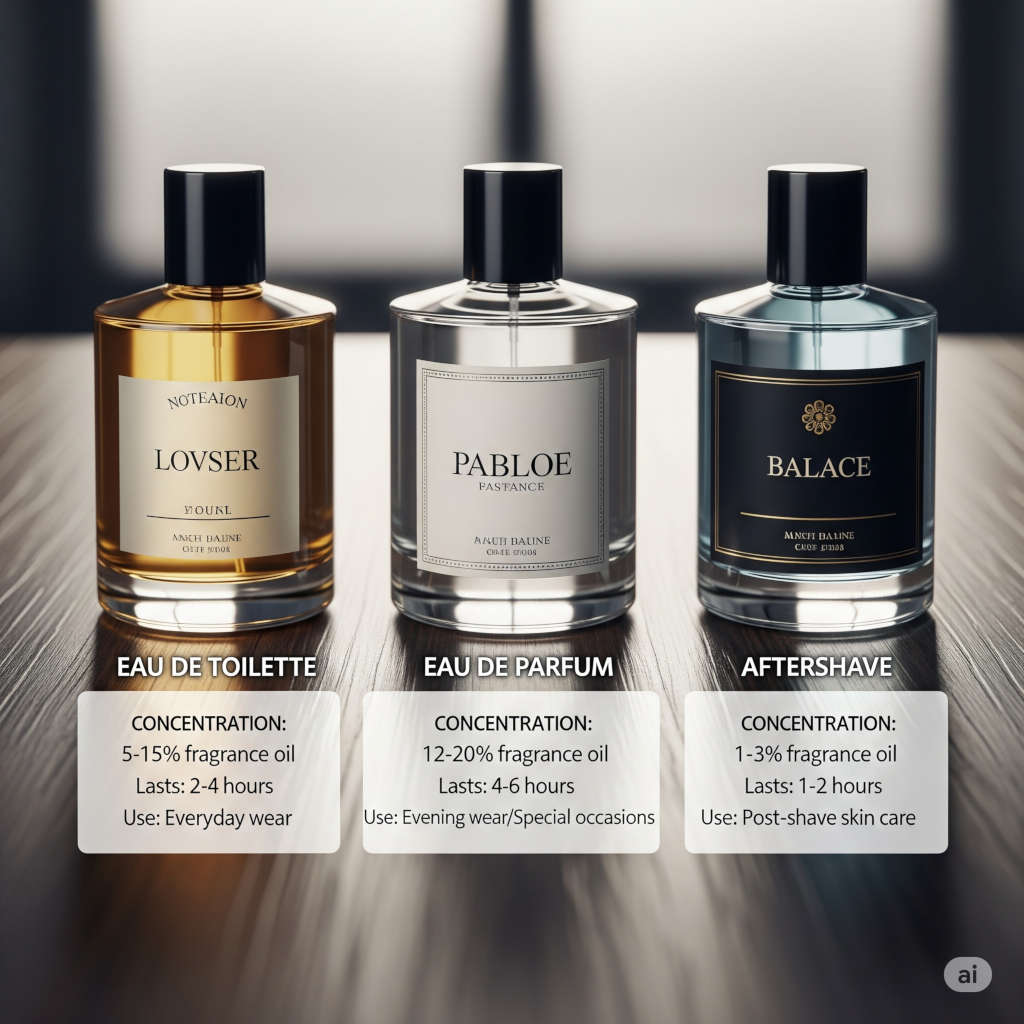
Fragrance isn’t just an accessory — it’s a part of your identity. It can energize your morning, make you feel more confident before a meeting, or leave a lasting impression during a special evening. But when you’re faced with a row of bottles labeled Eau de Toilette, Eau de Parfum, and Aftershave, it’s easy to feel lost.
They all sound refined, but the differences between them are more than just marketing. Each one is created for a specific purpose, with different concentrations, strengths, and ideal times to use them.
This guide will break it all down — then we’ll go beyond the basics to cover seasonal scent choices, practical tips, and real-life usage scenarios so you’ll know exactly how to pick and wear your fragrance for any occasion.
The Basics: Why Fragrance Types Matter
Think of fragrances like music volumes. You might want something quiet in the background for a workday (EDT), something louder for a special occasion (EDP), and something quick and refreshing after a shave (Aftershave).
If you don’t understand the differences:
- You might end up with something too strong for everyday wear.
- You could buy an aftershave thinking it’s a cologne and be disappointed when the scent disappears in minutes.
- You might overspend on an EDP when an EDT would have been perfect for your needs.
Knowing the type lets you match the scent to the situation and get the most out of your purchase.
Fragrance Concentrations — The Key Factor
Every fragrance is made from:
- Perfume oils — the scented essence
- Alcohol and/or water — to carry and diffuse the scent
The percentage of perfume oils is what sets each type apart.
Higher concentration = stronger scent = longer wear time.
| Type | Perfume Oil Concentration | Longevity | Scent Strength |
|---|---|---|---|
| Aftershave | 1–3% | < 1 hour | Very subtle |
| Eau de Cologne | 2–5% | 1–2 hours | Light |
| Eau de Toilette (EDT) | 5–15% | 3–5 hours | Light–moderate |
| Eau de Parfum (EDP) | 15–20% | 5–8+ hours | Moderate–strong |
| Parfum / Extrait | 20–40% | 8–24 hours | Very strong |
Eau de Toilette (EDT)
What It Is
A light to moderate fragrance strength perfect for everyday wear. It gives enough scent to be noticed without overpowering people around you.
Longevity & Projection
- Lasts: 3–5 hours
- Projection: Moderate — people can smell it when they’re near you, but not across the room
Best Times to Wear
- Daytime: Especially in spring and summer
- Work environments: Won’t overwhelm colleagues
- Casual outings: Shopping, brunch, or coffee dates
Pros
- Affordable compared to stronger types
- Fresh and versatile
- Less risk of being “too much”
Cons
- Requires reapplication for long days
- Can fade quickly in cold weather
Eau de Parfum (EDP)
What It Is
A stronger, more concentrated fragrance with greater depth. Perfect when you want your scent to linger.
Longevity & Projection
- Lasts: 5–8+ hours
- Projection: Moderate to strong — noticeable beyond arm’s length
Best Times to Wear
- Evenings: Dinners, dates, or events
- Cold weather: Rich scents bloom in the cold
- Special occasions: Weddings, parties, or performances
Pros
- Long-lasting
- Complex scent evolution
- Luxurious feel
Cons
- Pricier
- Can be overpowering in hot weather
Aftershave
What It Is
Primarily a post-shaving skincare product, not a fragrance. Lightly scented, it soothes the skin and prevents irritation.
Longevity & Projection
- Lasts: Less than 1 hour
- Projection: Very subtle
Best Times to Use
- Immediately after shaving
- When you want freshness without lasting scent
Pros
- Skin benefits
- Refreshing
- Can layer with other scents
Cons
- Very short-lasting scent
- Not a substitute for cologne
Seasonal Scent Advice
Fragrances behave differently depending on the weather. Heat makes scents more intense, while cold mutes them. Matching your fragrance type and notes to the season ensures the scent smells its best.
Spring
- Best choice: EDT or lighter EDP
- Notes to try: Floral (jasmine, rose, lily), green (cut grass, herbs), citrus (bergamot, lemon)
- Why: Fresh, uplifting notes match the season’s renewal.
Summer
- Best choice: EDT or even Eau de Cologne
- Notes to try: Aquatic (sea breeze, water lily), fruity (melon, mango), citrus, light woods
- Why: Heat amplifies scent; lighter compositions stay pleasant.
Autumn
- Best choice: EDP or warm EDT
- Notes to try: Spicy (cinnamon, clove, nutmeg), amber, patchouli, woody accords
- Why: Cooler air supports deeper, cozier scents.
Winter
- Best choice: EDP or Parfum
- Notes to try: Gourmand (vanilla, chocolate, coffee), smoky, oud, leather, musky scents
- Why: Heavy notes shine in the cold without overwhelming.
Real-World Usage Scenarios
Let’s bring these categories to life with examples.
Scenario 1 — Office Professional
You work in a busy open-plan office.
- Aftershave: Quick refresh post-shave before work.
- EDT: Subtle citrus-woody scent to stay fresh all morning.
- Avoid EDP: Too strong for close quarters unless lightly applied.
Scenario 2 — Outdoor Summer Wedding
Afternoon ceremony in warm weather.
- EDT: Light floral or aquatic to avoid overpowering in the heat.
- Apply sparingly to pulse points and reapply later for the reception.
Scenario 3 — Winter Date Night
Cozy restaurant in December.
- EDP: Warm vanilla-amber scent that lingers through dinner.
- Aftershave in the morning, EDP before leaving home.
Scenario 4 — Traveler on the Go
You’re flying to a conference.
- Aftershave: For a fresh start post-shave.
- EDT: Fresh scent that won’t overwhelm fellow passengers.
- Carry a travel spray for touch-ups.
Scenario 5 — Weekend Sports & Activities
Morning run followed by errands.
- Aftershave: For skin comfort.
- Skip heavy scents; a splash of light EDT or cologne works best.
Tips for Getting the Most Out of Any Fragrance
- Apply to pulse points (wrists, neck, behind ears) — body heat helps scent diffuse.
- Moisturize first — hydrated skin holds scent longer.
- Spray from a short distance — 4–6 inches is ideal.
- Don’t rub wrists together — it crushes top notes.
- Store in a cool, dark place — heat and light break down perfume oils.
Building a Well-Rounded Fragrance Wardrobe
For most people, three fragrances are enough:
- One EDT for work and casual day wear
- One EDP for evenings or special occasions
- One Aftershave for grooming and light refreshment
If you want more variety, you can add seasonal options — fresher scents for summer, richer ones for winter.
Final Thoughts
Eau de Toilette, Eau de Parfum, and Aftershave aren’t interchangeable — each serves a different purpose.
- Aftershave: Skin care first, scent second.
- Eau de Toilette: Versatile daytime fragrance.
- Eau de Parfum: Long-lasting and luxurious for moments that matter.
When you choose based on purpose, setting, and season, you’ll not only smell great but also make your fragrance truly part of your personal style.
Fragrance is invisible, but its effect is unforgettable. Pick wisely, wear confidently, and let your scent speak before you say a word.