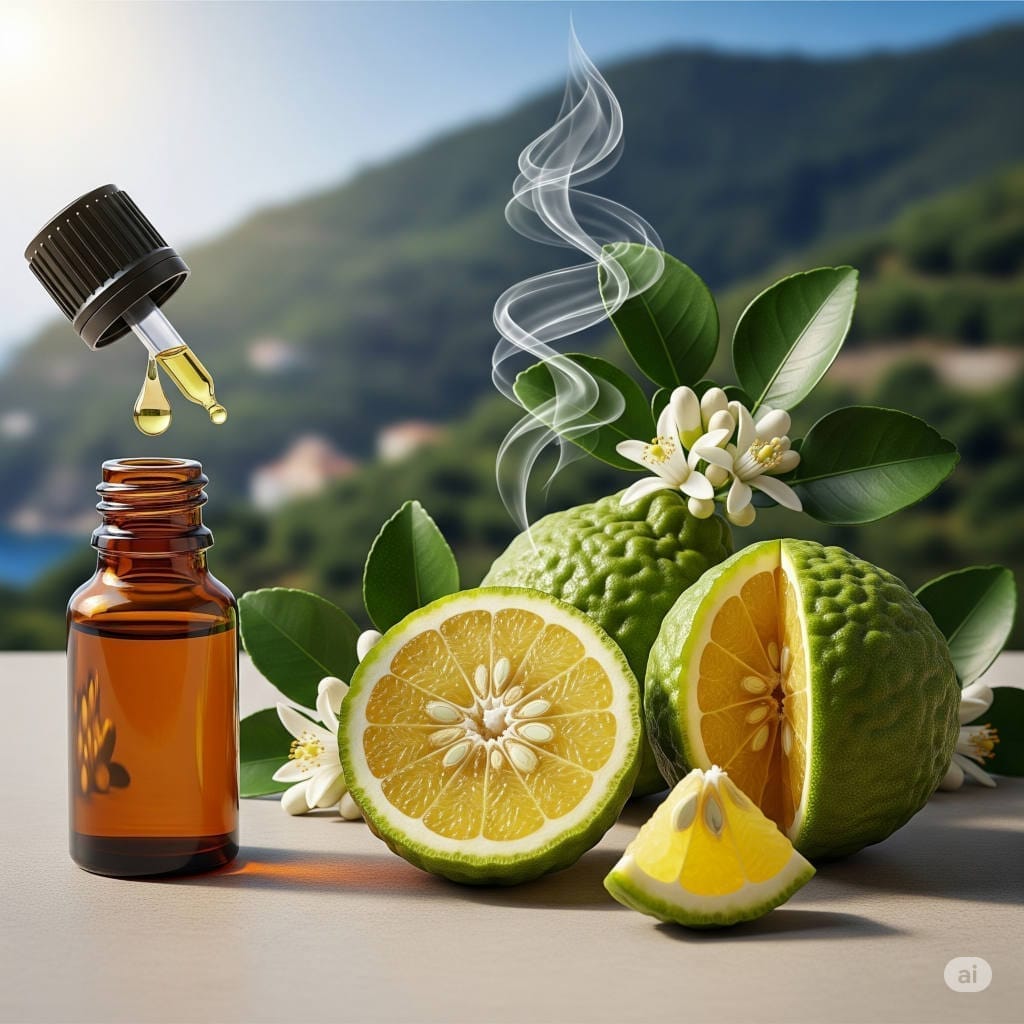
Walk into a perfume shop on Oxford Street, sip on a cup of Twinings Earl Grey, or light a Jo Malone candle, and you’re likely to notice a recurring word: bergamot. It appears everywhere in the fragrance world, but if you haven’t smelt the fruit itself, it can be surprisingly hard to imagine.
So, what does bergamot smell like?
The short answer: it’s citrusy, yes—but not in the sharp way a lemon is. It’s floral, too, but not in a heavy, rose-like sense. It’s a fresh, elegant balance of zesty, green, and slightly sweet notes with a touch of spice. No wonder perfumers have relied on it for centuries and why Britons unknowingly enjoy it every day in their tea.
In this guide we’ll explore:
- What bergamot is and where it comes from
- How to describe its scent in plain English
- Why it’s different from other citrus fruits
- Its history in perfumes and in British tea culture
- The wellbeing benefits of bergamot oil
- Perfumes, teas, and products you can try in the UK
- Practical tips to recognise and enjoy bergamot daily
By the end, you’ll understand why bergamot has earned its nickname: the “prince of citrus.”
🌿 First Things First: What Is Bergamot?
Bergamot (Citrus bergamia) is a small, pear-shaped fruit that looks like a cross between a lime and an orange. Its skin ripens from green to yellow, and while it’s technically edible, you won’t find anyone snacking on it—it’s far too sour and bitter.
The real treasure is in the peel, where the essential oil is found. This oil is cold-pressed or steam-distilled to capture its scent, which has become one of the most important building blocks in perfumery.
Where does it come from?
- The finest bergamot comes from Calabria, Southern Italy, where the climate and soil produce the richest oil.
- Smaller crops exist in France, Ivory Coast, and parts of South America.
Why should you care Bergamot?
Because bergamot is part of British daily life—whether we realise it or not. Every time we brew Earl Grey tea, test a cologne in Boots, or light a citrus candle from The White Company, we’re experiencing bergamot.
🍊 So, What Does Bergamot Actually Smell Like?
Here’s the best way to picture it:
- Imagine the freshness of lemon, but without the sour sting.
- Add the sweetness of orange, but tone it down so it doesn’t feel sugary.
- Stir in a whisper of lavender and green herbs.
- Finish with a delicate bitterness, the kind that keeps a scent from becoming cloying.
That’s bergamot.
It’s bright, uplifting, and refreshing, but with enough complexity to feel refined rather than just fruity.
The scent in layers:
- First whiff (top note): Sparkling citrus, like a lemon-orange hybrid.
- Middle: A soft floral touch, slightly herbal, almost tea-like.
- Dry-down: A subtle green bitterness, grounding the freshness.
This balance explains why perfumers adore it: bergamot gives fragrances sparkle without overwhelming them.
🍋 Bergamot vs Other Citrus Scents
It’s easy to confuse bergamot with its cousins, but once you smell them side by side, the differences are clear:
- Lemon: Very sharp and tangy—more cleaning spray than perfume.
- Lime: Zesty and bitter, but one-dimensional.
- Orange: Sweet and juicy, cheerful but not elegant.
- Grapefruit: Bitter, with a sulphuric edge.
- Bergamot: The best of all worlds—fresh, floral, slightly spicy, and sophisticated.
Put simply, bergamot is the grown-up citrus—zesty enough to energise you, yet smooth enough to wear all day.
🕰 A Short History of Bergamot in Perfumery
Bergamot has been shaping fragrance for over 300 years.
- 1709: Johann Maria Farina in Cologne created the world’s first Eau de Cologne, featuring bergamot as the star. It became a European sensation.
- 1800s: Italian farmers in Calabria began exporting bergamot oil, which quickly became indispensable to perfumers.
- 1900s onwards: Bergamot appeared in iconic scents like Chanel No. 5 and Dior Eau Sauvage, solidifying its place as a perfumery classic.
Today, over half of all fine fragrances include bergamot somewhere in their formula.
🧴 Why Do Perfumers Love Bergamot?
If you talk to a perfumer, they’ll tell you bergamot is like the glue of a fragrance. Here’s why:
- It’s versatile—fits in colognes, florals, woody blends, even gourmand perfumes.
- It blends seamlessly, smoothing sharp edges and brightening darker notes.
- It lasts longer than other citrus oils, which often vanish within minutes.
- It adds sparkle—that first refreshing impression when you spray a fragrance.
- It’s a balancer—preventing a perfume from being too sweet, heavy, or flat.
Think of bergamot as the friendly host at a party: it helps everyone else get along.
☕ Bergamot and Earl Grey Tea: The British Connection
If you live in the UK, you’ve almost certainly experienced bergamot through Earl Grey tea.
This black tea blend is flavoured with bergamot oil, giving it that unmistakable citrus-floral lift. It’s named after Charles Grey, 2nd Earl Grey, Prime Minister in the 1830s.
Whether you prefer your Earl Grey from Twinings, Fortnum & Mason, or Yorkshire Tea, the aroma rising from your cup is bergamot at work.
Tip: Next time you sip, pause and breathe in the steam—you’ll instantly understand what bergamot smells like.
🌱 Bergamot in Aromatherapy and Wellbeing
Bergamot essential oil is also a staple in UK wellness routines. Brands like Neal’s Yard Remedies and Tisserand use it frequently.
Benefits include:
- Reducing stress and anxiety.
- Uplifting mood and boosting confidence.
- Helping with focus and clarity.
- Adding freshness to home environments.
It’s often called the “happy oil” because it energises without overstimulating.
🧾 Perfumes with Bergamot You Can Try in the UK
Want to smell bergamot in its purest perfume form? Here are a few to sample:
- Acqua di Parma Colonia – Italian classic, sparkling with citrus and herbs.
- Jo Malone London Bergamot & Oud – quintessentially British, bright yet smoky.
- Tom Ford Neroli Portofino – a Mediterranean-style citrus fragrance.
- Dior Eau Sauvage – timeless men’s cologne with a citrus backbone.
- Chanel No. 5 – even this legendary floral opens with bergamot.
Most UK department stores like Selfridges, Liberty, or John Lewis will stock at least one of these.
🌍 Bergamot’s Italian Roots
While we enjoy it in Britain, bergamot remains deeply tied to Calabria. It’s so important there that its oil has Protected Designation of Origin (PDO) status, like Parma ham or Stilton cheese.
This guarantees authenticity, so when you buy real bergamot oil, you’re supporting generations of Calabrian growers.
🧪 The Science Behind the Smell
Bergamot’s complexity comes from its chemical makeup:
- Limonene – provides the citrus backbone.
- Linalool & linalyl acetate – add floral softness and relaxation.
- Bergapten – introduces a green bitterness (but makes the oil photosensitive, so avoid applying before sun exposure).
It’s this cocktail of molecules that makes bergamot feel multi-dimensional compared to simple lemon or orange.
🕯 Everyday Uses in the UK
You don’t need to be a perfume collector to enjoy bergamot. It shows up in plenty of everyday products:
- Candles: Jo Malone, Diptyque, and The White Company all offer bergamot blends.
- Soaps & shower gels: Found in luxury brands and high-street ranges alike.
- Cleaning sprays: A posher-smelling alternative to lemon-based cleaners.
- Essential oils: Easy to buy from Holland & Barrett or Neal’s Yard.
🌸 Pairings That Bring Out Bergamot’s Best
Bergamot is rarely left to stand alone. It pairs beautifully with:
- Florals (rose, jasmine, lavender): Adds freshness.
- Woods (cedar, sandalwood): Lifts heavy notes.
- Spices (ginger, cardamom): Balances warmth.
- Vanilla/tonka: Cuts through sweetness.
This adaptability explains why it fits in almost any fragrance family.
🎨 How to Describe Bergamot to a Friend
Struggling to explain it? Try these:
- Like lemon zest mixed with flowers.
- The aroma of Earl Grey tea steam.
- A cross between orange peel and lavender.
💡 Practical Tips
- Tea: Start with a good Earl Grey—Twinings is classic, Fortnum & Mason if you’re feeling fancy.
- Perfume shopping: Ask to smell bergamot-heavy fragrances at Boots, Liberty, or Harrods.
- Home scenting: Try bergamot candles or diffusers from Jo Malone or The White Company.
- Wellness: Add bergamot oil to a diffuser for a stress-relieving work-from-home atmosphere.
- DIY cleaner: Mix water, vinegar, and a few drops of bergamot oil for a natural spray.
🙋♀️ FAQs
Does bergamot smell like lemon?
Not quite. It’s citrusy like lemon but smoother, softer, and more floral.
Can you eat bergamot?
The fruit is too sour, but the peel oil is safe in flavourings like tea.
Why is it in so many perfumes?
Because it balances blends, adds sparkle, and pairs with almost everything.
What’s the easiest way to smell bergamot?
Brew a cup of Earl Grey tea—the steam is pure bergamot.
📝 Final Thoughts
So, what does bergamot smell like? It’s a fragrance that’s both familiar and sophisticated—citrus with floral softness, a green twist, and just enough spice to make it interesting.
For us in Britain, it’s the hidden star of our tea rituals, our perfumes, and even our candles. Whether you sip it, spritz it, or light it, bergamot has a way of making life feel a little fresher, calmer, and more elegant.
It’s not just another citrus—it’s the sunshine note that has quietly shaped fragrance and culture for centuries.