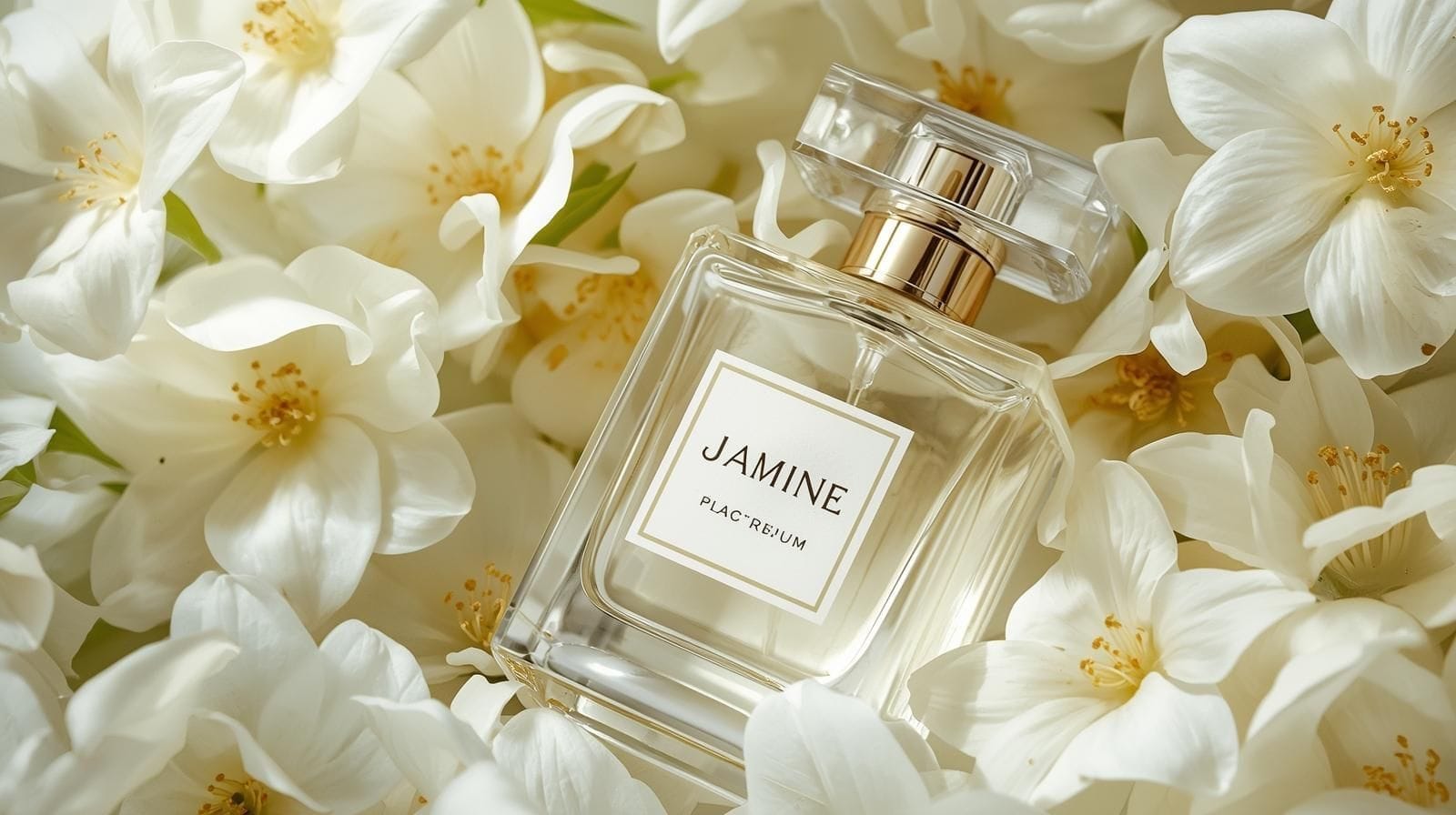
I’ll be honest—when I started my fragrance journey five years ago, I was that person who rolled my eyes at jasmine perfumes. “Another white floral?” I’d think, spraying yet another jasmine-heavy fragrance that smelled disappointingly similar to the last ten I’d tried. But here’s the thing about jasmine: dismissing it entirely would be like writing off pizza because you’ve only ever had frozen varieties from the grocery store.
After years of exploring everything from vintage Chanel extraits to obscure indie creations, I’ve come to realize that jasmine isn’t the problem—it’s how we’ve been using it. So let’s dive deep into this controversial flower and figure out whether it deserves its throne or if it’s time for a floral revolution.
The Making of a Floral Legend
Before we judge jasmine too harshly, we need to understand how it earned its royal reputation. This isn’t some modern marketing campaign gone wild—jasmine has been captivating humans for over 1,000 years.
In ancient Persia, jasmine was literally reserved for royalty. Common people weren’t allowed to cultivate or wear it, making it the ultimate luxury ingredient. When Persian traders brought jasmine to Europe via the Silk Road, it maintained its elite status. Only the wealthiest could afford genuine jasmine oil, which required enormous quantities of hand-picked flowers to produce even small amounts of fragrant extract.
But jasmine’s mystique goes beyond just scarcity. Unlike most flowers that bloom during the day, jasmine varieties like sambac and grandiflorum release their strongest fragrance at night. Imagine walking through a moonlit garden and suddenly being enveloped by this intoxicating, almost narcotic scent—it’s no wonder ancient cultures associated jasmine with magic, romance, and spiritual transcendence.
The chemistry behind jasmine’s allure is fascinating too. Natural jasmine absolute contains over 100 different aromatic compounds working together in perfect harmony. You’ve got fresh, green top notes from leaf alcohol compounds, creamy white floral heart notes from benzyl acetate, and those famously animalic base notes from indole—the same compound found in, well, barnyard animals. It sounds gross, but in tiny amounts, indole adds a sensual, almost human-like warmth that makes jasmine irresistible.
This complexity is why traditional perfumers called jasmine “liquid gold.” A single kilogram of jasmine absolute requires about 1,000 kilograms of fresh flowers, all picked by hand in the early morning hours when their fragrance is strongest. The extraction process is equally labor-intensive, involving either solvent extraction or the ancient enfleurage method where flowers are layered with fat to absorb their essence.
When Royalty Goes Mainstream: The Oversaturation Problem
Here’s where our love story with jasmine gets complicated. Somewhere between jasmine’s aristocratic origins and today’s fragrance market, something went wrong. Walk into any department store, and you’ll find jasmine in roughly 70% of women’s fragrances. It’s in teen body sprays, celebrity perfumes, designer fragrances, and even men’s colognes disguised as “fresh” or “clean” scents.
This democratization sounds like a good thing, right? Everyone deserves to experience beautiful fragrance, regardless of budget. The problem is that most commercial jasmine doesn’t smell like the complex, nuanced flower that earned jasmine its reputation. Instead, we get simplified synthetic versions that capture jasmine’s prettiness but none of its personality.
I remember testing a popular celebrity fragrance that proudly advertised “jasmine petals” as a key ingredient. What I smelled was sweet, clean, and pleasant—but it had all the complexity of a scented candle. Compare that to something like Serge Lutens’ A La Nuit, where jasmine feels dangerous and alive, almost breathing on your skin. The difference is staggering.
The real issue is what I call “jasmine fatigue.” When every other fragrance contains some version of jasmine, our noses become desensitized to it. What was once exotic becomes wallpaper. What was once precious becomes predictable. And unfortunately, many people’s first (and sometimes only) experience with jasmine comes through these watered-down commercial versions.
Social media hasn’t helped either. Instagram and TikTok fragrance influencers often promote whatever’s trending or sponsored, which tends to be mainstream releases heavy on familiar notes like jasmine. This creates an echo chamber where the same jasmine-heavy fragrances get recommended repeatedly, while more innovative or challenging jasmine compositions get overlooked.
The Case for Team Jasmine: Why the Queen Still Rules
Before you write off jasmine completely, let me share why I’ve become a convert—and why dismissing jasmine entirely would be a huge mistake.
First, let’s talk versatility. Jasmine isn’t just one smell—it’s an entire palette of possibilities depending on how it’s used, what it’s paired with, and which variety we’re talking about. Jasmine sambac smells different from jasmine grandiflorum, which smells different from synthetic jasmine hedione. Each brings something unique to a composition.
Take Maison Francis Kurkdjian’s A La Rose, where jasmine plays a supporting role to Bulgarian rose, adding creaminess without overwhelming the composition. Or consider Hermès’ Un Jardin Sur Le Toit, where synthetic jasmine hedione creates an airy, sparkling effect that feels nothing like traditional white florals. Then there’s Tom Ford’s Jasmin Rouge, which pushes jasmine into sultry, almost dirty territory that challenges every preconception about “pretty” floral fragrances.
These examples prove that jasmine isn’t limiting—it’s liberating. The problem isn’t the ingredient; it’s the lack of imagination in how it’s being used. When perfumers treat jasmine as a creative building block rather than a marketing checkbox, magic happens.
I’ve also come to appreciate how synthetic jasmine molecules have democratized access to this ingredient. Yes, purists might scoff at synthetic jasmine, but molecules like Firmenich’s Jasmal or Givaudan’s Jasmone actually offer creative possibilities that natural jasmine can’t match. They’re more consistent, more sustainable, and they allow perfumers to emphasize specific aspects of jasmine’s scent profile.
Plus, let’s be practical: if every jasmine fragrance required natural absolute, most of us couldn’t afford to wear them. A single bottle would cost hundreds or thousands of dollars. Synthetic jasmine allows indie perfumers and smaller brands to create beautiful jasmine compositions at accessible prices.
The Quality Divide: Why Not All Jasmine is Created Equal
After testing hundreds of jasmine fragrances, I’ve learned to spot the difference between lazy jasmine and inspired jasmine. It usually comes down to three factors: quality of materials, complexity of composition, and perfumer skill.
Let’s start with materials. Natural jasmine from Grasse, France—considered the gold standard—costs around $4,000-$5,000 per kilogram. When you smell genuine Grasse jasmine absolute, it’s a revelation. It’s green and fresh, then creamy and floral, with animalic undertones that feel almost alive on your skin. This is jasmine with a personality.
Compare that to basic synthetic jasmine, which might cost $50 per kilogram. It smells pleasant and recognizably jasmine-like, but it’s flat, one-dimensional. It’s the difference between a live orchestra and a ringtone version of the same song.
But here’s the interesting part: price doesn’t always predict quality. Some expensive designer fragrances use cheap jasmine synthetics, while some affordable niche brands invest in high-quality jasmine materials. The key is knowing what to look for.
Great jasmine fragrances have evolution. They smell different five minutes after application than they do two hours later. Poor jasmine fragrances smell exactly the same from start to finish—what perfumers call “linear.” Great jasmine plays well with other notes, creating unexpected combinations. Poor jasmine overwhelms everything else or gets overwhelmed itself.
I’ve learned to test jasmine fragrances on skin rather than paper strips. Jasmine interacts with body chemistry in fascinating ways. A jasmine that smells cloying on paper might become sensual and complex on skin. Conversely, a jasmine that smells lovely on a test strip might turn soapy or harsh when it meets your natural oils.
Modern Jasmine Masters: Perfumers Pushing Boundaries
Despite jasmine’s oversaturation, some contemporary perfumers are doing incredible things with this classic ingredient. Let me introduce you to a few who’ve changed my mind about jasmine’s creative potential.
Dominique Ropion, the nose behind Frédéric Malle’s Carnal Flower, took jasmine to its narcotic extreme. This isn’t pretty, polite jasmine—it’s jasmine that grabs you by the throat and demands attention. Ropion used massive amounts of natural jasmine absolute to create something that’s almost uncomfortable in its intensity, but absolutely unforgettable.
Then there’s Christine Nagel at Hermès, who’s been deconstructing traditional florals and rebuilding them in unexpected ways. In Un Jardin Sur La Lagune, she used jasmine as a bridge between salty, aquatic notes and warm woods—a combination that shouldn’t work but absolutely does.
Indie perfumer Sarah Baker created Jasmine & Sun with a photorealistic approach, layering different jasmine molecules to create the olfactory equivalent of watching jasmine bloom in real time. It starts green and fresh, evolves to creamy white florals, then settles into warm, slightly dirty base notes that feel surprisingly intimate.
These perfumers prove that jasmine still has secrets to reveal. They’re not just using jasmine—they’re interrogating it, challenging it, finding new ways to make it speak.
The Sustainability Question: Jasmine’s Environmental Impact
As we debate jasmine’s artistic merits, we can’t ignore its environmental implications. Traditional jasmine cultivation is incredibly resource-intensive. Those 1,000 kilograms of flowers needed for one kilogram of absolute? They require enormous amounts of water, land, and human labor.
Climate change is making this worse. Jasmine flowers are sensitive to temperature and humidity changes. Growers in traditional jasmine regions like Grasse and Egypt are reporting smaller harvests and lower quality flowers as weather patterns shift.
This is where synthetic jasmine becomes not just economically smart but environmentally responsible. Modern jasmine molecules like hedione or methyl jasmonate can be produced in laboratories with much smaller environmental footprints. Some are even derived from renewable sources like citrus waste.
Forward-thinking fragrance houses are finding middle ground solutions. Hermès has invested in sustainable jasmine cultivation programs in Egypt, working with local farmers to improve growing practices while ensuring fair wages. L’Artisan Parfumeur sources jasmine from organic farms that use traditional, environmentally friendly growing methods.
The future of jasmine in fragrance probably involves a hybrid approach: natural jasmine for luxury and artisanal fragrances, high-quality synthetics for mainstream products, and innovative extraction methods that maximize efficiency while minimizing environmental impact.
Finding Your Jasmine: A Personal Guide
If you’re curious about exploring jasmine fragrances beyond the department store offerings, here’s what I’ve learned from my own jasmine journey.
Start with the classics, but choose wisely. Chanel No. 5 contains jasmine, but it’s so blended with other ingredients that jasmine newcomers might not even notice it. Instead, try something like Diptyque Jasmin or L’Artisan La Chasse aux Papillons, where jasmine is clearly present but beautifully balanced.
Pay attention to jasmine varieties. Sambac jasmine (used in fragrances like Tom Ford Jasmin Rouge) tends to be creamier and more narcotic. Grandiflorum jasmine (found in many French perfumes) is often greener and fresher. Egyptian jasmine can be more animalic and complex.
Don’t limit yourself to “women’s” fragrances. Some of the most interesting jasmine compositions are found in unisex or even men’s fragrances, where jasmine is used in unexpected ways. Creed Royal Mayfair uses jasmine alongside gin botanicals for a surprisingly fresh, sophisticated effect.
Test on skin, not paper. Jasmine interacts with body chemistry in complex ways. What smells overwhelming on a test strip might be perfect on your skin, and vice versa. Give fragrances time to develop—jasmine often becomes more beautiful as it settles.
Consider the season and occasion. Light, airy jasmine compositions work well in summer heat, while richer, more narcotic jasmine fragrances shine in cooler weather. Some jasmine fragrances are perfect for daytime wear, while others demand evening occasions.
The Verdict: Long Live the Queen
After this deep dive into jasmine’s complex world, I’ve reached a conclusion that might surprise those who know about my initial jasmine skepticism: jasmine deserves its crown, but it needs better subjects serving it.
The problem was never jasmine itself—it was the lazy, uninspired way too many perfumers and brands have been using it. When jasmine is treated as a marketing gimmick or a cheap way to add “floral” to a fragrance description, of course it becomes boring and overused.
But when jasmine is respected for its complexity, when perfumers take time to understand its nuances and possibilities, when it’s sourced responsibly and used creatively—that’s when we remember why this flower earned its royal title in the first place.
The fragrance world is big enough for both accessible jasmine and artisanal jasmine, synthetic innovations and natural traditions. The key is being an educated consumer who knows the difference and supports the brands and perfumers who are pushing jasmine forward rather than just cashing in on its popularity.
So the next time you encounter a jasmine fragrance, don’t write it off automatically. Ask yourself: Is this lazy jasmine or inspired jasmine? Is this perfumer using jasmine as a shortcut or as a creative challenge? Your nose—and your fragrance collection—will thank you for the distinction.
Jasmine isn’t going anywhere, and frankly, I’m glad. The world would be a less beautiful place without this floral monarch, even if we have to wade through some mediocre interpretations to find the real gems. The queen is dead; long live the queen.
Ready to explore jasmine fragrances with fresh perspective? Start with one high-quality jasmine composition and really pay attention to how it develops on your skin. You might just discover why this controversial flower has captivated humans for over a millennium.